
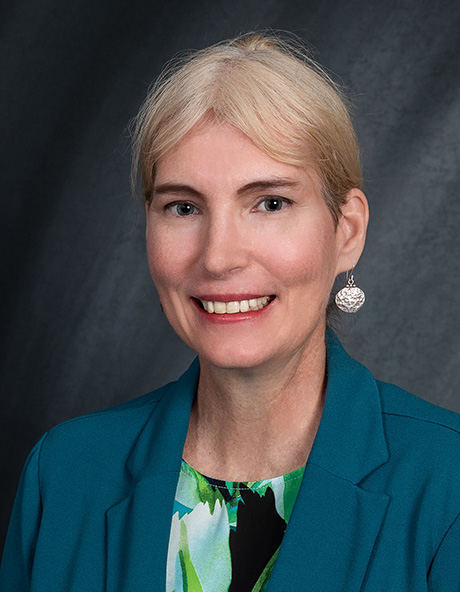
Astrid M. Müller, Assistant Professor of Chemical Engineering, University of Rochester
"Engineering Interfacial Microenvironments: Electrocatalysis for Sustainable Chemical Manufacturing and PFAS Destruction"
Abstract:
Research in electrocatalysis often centers on catalyst design, specifically the composition and structure of the active site. Our research establishes that the electrode microenvironment, comprising solvent organization, ion population, hydrogen-bonding networks, electrode wettability, and the time-dependent applied potential, is an equally important design variable that governs electrocatalytic selectivity, energy efficiency, and durability. To distinguish microenvironment effects from those of the catalyst itself, we developed laser-enabled synthesis and fabrication strategies that produce surfactant-free nanocatalysts and graft them in a single aqueous step onto hydrophilized porous carbon, yielding binder-free electrodes in which catalyst, support, and electrolyte can be varied independently. Surfactant-free, laser-synthesized [NiFe]-layered double hydroxide nanocatalysts supported on hydrophilized carbon fiber paper selectively electrooxidize toluene to benzyl alcohol with 100% selectivity at 87% conversion, using water as the oxygen-atom source and no sacrificial oxidant. This selectivity arises from water-derived hydroxyl radicals within a hydrogen-bonded water/N,N-dimethylformamide solvation environment that suppresses overoxidation. Beyond hydrocarbon electrooxidation, we have achieved complete defluorination of structurally diverse per- and polyfluoroalkyl substances (PFAS) in aqueous electrolytes. Our findings reveal that lithium ions sequester fluoride through ion pairing and that high hydroxide activity competes with fluoride adsorption. Combined with pulsed electrolysis incorporating brief polarity reversal, these effects prevent anode fouling and enable sustained C–F bond cleavage on inexpensive, durable nickel-based alloy anodes.
The overarching goal of our research is to translate mechanistic understanding of electrified interfaces into predictive design rules for achieving selectivity, activity, and durability, unified by water activation. Grounded in insight into catalyst materials, interfacial liquid structure, and reaction mechanisms, the ultimate aim is to enable scalable, energy-efficient electrochemical processes for sustainable chemical manufacturing and aqueous PFAS remediation.
Bio:
Astrid M. Müller has been an Assistant Professor of Chemical Engineering at the University of Rochester since 2018. She completed her undergraduate studies at the Technical University of Munich in Germany, earning the equivalent of a double major at the BS and MS level in Chemistry and Chemical Engineering. Prof. Müller obtained her PhD in Physical Chemistry (magna cum laude) for work on ultrafast reaction dynamics at the Max Planck Institute of Quantum Optics in Germany. Her postdoctoral research at UC Berkeley and UC Riverside involved developing a fundamental understanding of laser–matter interactions. As a staff scientist at Caltech, she pioneered the pulsed laser in liquid synthesis of earth-abundant water-splitting materials to enable decarbonization technologies. Her independent research uses laser-made, surfactant-free nanocatalysts and binder-free electrodes to establish the electrode microenvironment as a design variable as important as the catalyst itself. Her group couples inner-sphere electrocatalytic water activation to outer-sphere reactions, with applications in selective electrosynthesis and aqueous PFAS destruction.